
Homeowners' pick for heating and cooling across central Kentucky and the Bluegrass
Noises From the Condenser and What They Mean
Your outdoor unit is making a noise it never used to make. Maybe it buzzes when the AC kicks on, rattles like something loose is bouncing around inside, or screeches loud enough that the neighbours notice. We repair noisy outdoor units across Kentucky, Indiana, Ohio, Tennessee, West Virginia and Georgia. Shut the system off at the thermostat if the noise is loud or metallic, then call us.
Call (888) 560-0120- You reach a person, not a menu
- Open every day
- The quote comes first, in writing
Taking calls until 5:00 PM ET
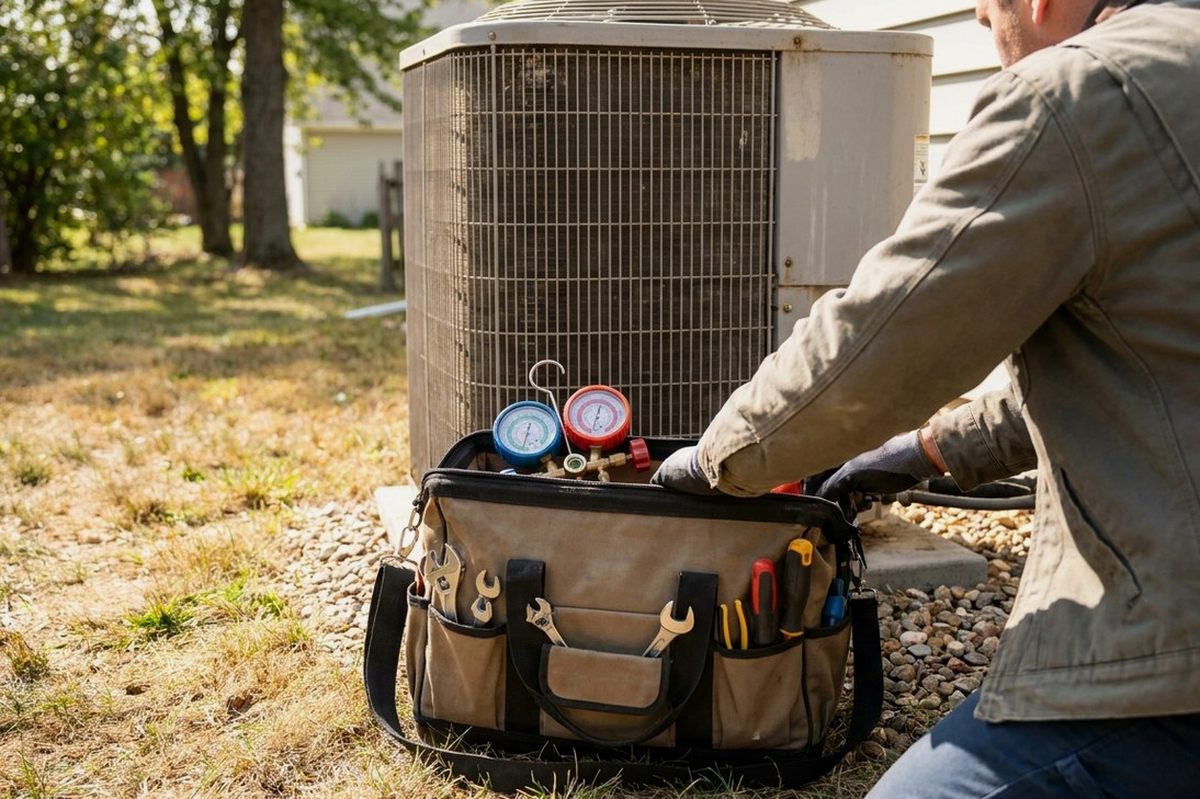
By our service team · vetted by the techs who do this daily
What the Noise Is Actually Telling You
Different sounds point to different parts, and the sound is usually the cheapest clue we get. A steady buzz or hum with no fan movement often means an electrical part is trying and failing to start. Rattling that changes with fan speed usually means hardware has worked loose or debris is riding around in the cabinet. Screeching or squealing points at a bearing or a motor under strain. A hard clunk on shutdown can be a mount that has given up. None of these fix themselves, and most get more expensive the longer the unit keeps running through them. Note when the noise happens, startup, mid-cycle or shutdown, and tell us. That detail saves diagnostic time.
Cause Family One: Loose Hardware and Debris
This is the cheapest and most common cause, so we check it first. Outdoor units live outside, and screws back out over years of vibration. A loose top panel, a fan grille that has worked free, or a section of sheet metal that vibrates against the frame will all rattle. Add a stick, a stone from the mower, or a corn cob that a raccoon left behind, and you get a racket that sounds far worse than it is. On older farmhouse installs we often find the unit sitting on a pad that has settled, so the whole cabinet leans and vibrates against the line set. Tightening, clearing and re-levelling is often the whole repair.
Cause Family Two: Electrical Parts Buzzing
A buzz at startup with the fan not turning usually means a capacitor or contactor is failing. The capacitor gives the motors the shove they need to start. When it weakens, motors hum, draw hard and get hot instead of spinning. A contactor with burnt or pitted points chatters and buzzes as it tries to hold. Both are common wear parts and both are a straightforward repair for us. What you should not do is open the electrical compartment. There is stored charge inside even with the breaker off, and that is genuine high-voltage territory. Turn the system off at the thermostat so it stops trying to start, and call us.
Cause Family Three: Fan Motor and Compressor
Screeching, grinding or a rising whine usually means bearings in the fan motor are going, or the compressor is labouring. A fan motor is a normal repair and we carry common ones. Compressor noise is more serious, because that part is the heart of the cooling side, and a loud growl or repeated hard buzzing at startup can mean it is drawing far more current than it should. Running an AC in that condition can turn a repairable fault into a replacement. If the outdoor unit screeches or grinds, shut it off and leave it off until we look. We will measure amp draw, check refrigerant pressures and tell you honestly which side of the repair line you are on.
What Is Safe for You, and What We Do Differently
Safe homeowner checks: confirm the thermostat is set correctly and the batteries are fresh, look for a tripped breaker, change a dirty filter, clear leaves, grass clippings and branches from around the outdoor unit, and make sure indoor vents are open. That is the list. Anything involving gas, refrigerant or the electrical compartment is ours. When we arrive for air conditioning repair we test capacitor values against spec, read amp draw on both motors, check contactor points, inspect blade and bearing play, and take pressure readings so we know whether the noise is mechanical or a symptom of an airflow or charge problem. Then we tell you the cause in plain English before anything gets replaced.
Noises From the Condenser and What They Mean — common questions
Can I keep running the AC until you get here?
If the noise is a mild rattle, yes, short cycles are usually fine. If it is screeching, grinding or a loud buzz with the fan not spinning, shut it off at the thermostat. Running through those sounds can damage the compressor.
Why does my unit buzz for a second then go quiet?
That is often a capacitor or contactor failing to start a motor, and the unit tripping out on its own protection. It is a common wear repair. Leave the system off and call us rather than letting it keep trying.
Is a rattling outdoor unit dangerous?
Usually it is loose hardware or debris rather than a hazard, but it can chew up a fan blade or motor if ignored. If you ever smell gas anywhere near the house, leave, call 911 or the gas utility first, then call us.
How it works
- Step 1
Tell us the symptom
Call or fill in the quote form and describe what changed. Warm air, no air, a smell, a noise, a breaker that keeps tripping. That detail tells us what parts to bring along.
- Step 2
We diagnose on site
We check the thermostat, the electrical side, airflow and the equipment itself before we quote anything. If the problem sits in the ductwork rather than the unit, we say so plainly.
- Step 3
We repair and explain
Most air conditioning repair and heating repair work finishes in one visit. We show you the failed part, explain what caused it, and tell you what to watch for next season.
- A real person answers
- Open 7 days
- Written quote before work starts
Why homeowners call us
- Propane and dual fuelPlenty of homes in our service area run propane heat or a dual fuel setup with a heat pump. We know how those systems switch over and why a bad changeover setting can leave you cold and burning fuel.
- Older houses, added ductworkFarmhouses often got ducts decades after they were built, run through crawl spaces and attics. When the equipment tests fine but rooms still fight each other, we look at the duct runs and static pressure.
- Repair before replacementA failed capacitor, a cracked wire, a clogged drain or a bad control board is a repair, not a new system. We tell you when the equipment is genuinely finished and when it is not.
- Plain talk on the phoneWe ask what the thermostat reads, whether the outdoor unit is spinning, and when it last worked normally. That two minute conversation often shortens the visit and keeps the repair cost down.
- All major brands, gas & electricCarrier, Trane, Lennox, Goodman, Rheem, York and more, as an independent company.
- Straight answersIf a system is not worth repairing, we say so, often right on the phone.
About this guide
If the safe checks didn't fix it, the fault is real
Mention which checks you ran when you book; it speeds up the visit.
- A real person answers
- Open 7 days
- Written quotes
- All major brands
- Gas & electric
Rather not call? Get a free quote →