
Homeowners' pick for heating and cooling across central Kentucky and the Bluegrass
Inside a Proper Seasonal Tune-Up
You booked a tune-up, someone spent twenty minutes at your furnace, and you are not sure what you paid for. Fair question. A real tune-up is a set of checks and cleanings on your heating and cooling system, done once a year for each side, and it catches the small stuff before it turns into a no-heat call in January. Here is what should happen and what it cannot fix.
Call (888) 560-0120- You reach a person, not a menu
- Open every day
- The quote comes first, in writing
Taking calls until 5:00 PM ET
By our service team · vetted by the techs who do this daily
What Skipping Maintenance Actually Does
Neglect does not break a system in one dramatic moment. It builds up. A dirty blower wheel moves less air, so your furnace runs hotter and cycles off on its limit switch. A coated outdoor coil cannot dump heat, so the compressor works harder every summer afternoon. Capacitors weaken quietly until the motor will not start. On propane and dual-fuel systems we see burners drifting out of adjustment and flame sensors going sooty, which shows up as a system that lights, runs a minute, then quits. None of that announces itself. It just shortens the life of parts you already paid for.
What a Real Tune-Up Includes
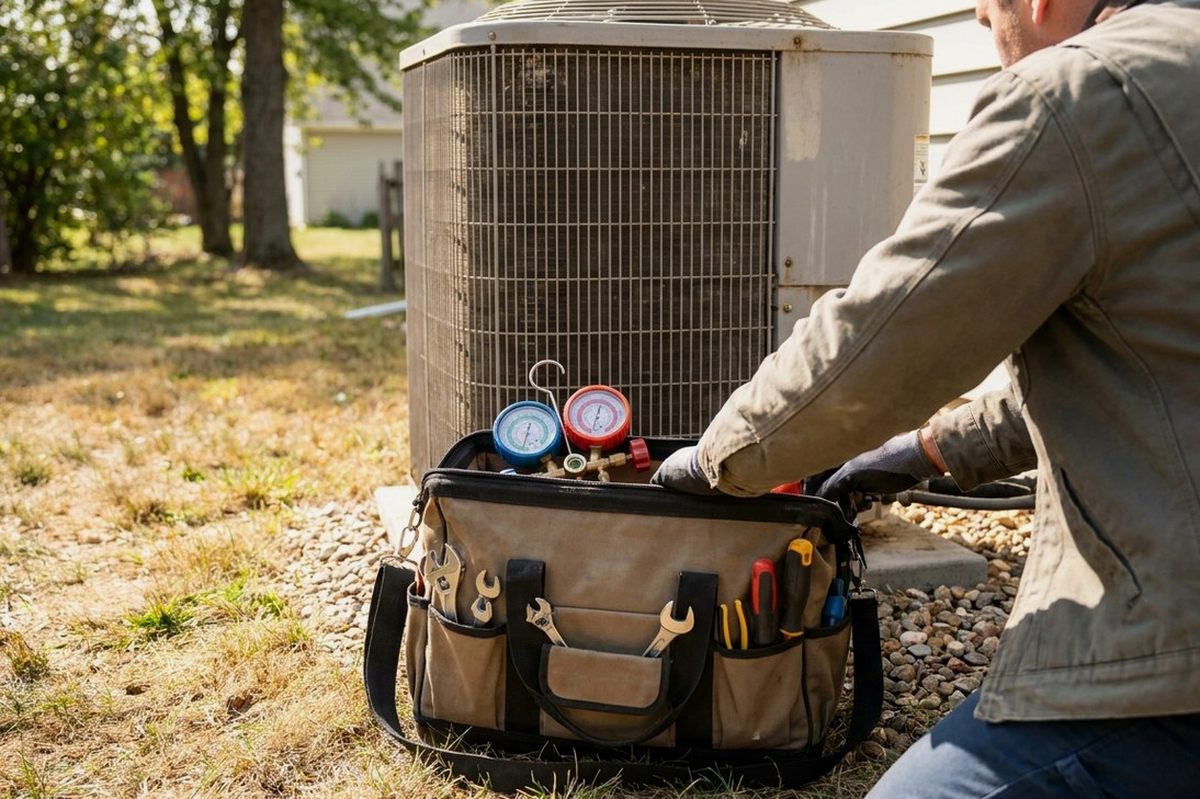
On the cooling side we wash the outdoor coil, check refrigerant pressures against the temperature outside, test the capacitor and contactor, clear the condensate drain, and read amp draw on the compressor and fan motor. On the heating side we pull and clean the burners as needed, check the flame sensor, inspect the heat exchanger, test safety controls and limits, check gas pressure or propane supply, and verify the blower is moving the air it should. We check the thermostat, the filter, and static pressure across the system. Then we tell you what we found in plain words, including anything that is wearing out but still working.
The Simple Habit, and How Often
Twice a year is the rhythm that works: cooling checked in spring, heating checked in fall, before you need either one. If your system is a heat pump running year round, or a dual-fuel setup switching between the heat pump and a propane or gas furnace, both visits matter because the controls that hand off between them need testing. Between visits your job is the filter. Check it monthly and change it when it looks loaded, more often with pets or a gravel driveway. Keep grass, leaves and snow drifts clear of the outdoor unit, and leave your supply and return vents open.
What a Tune-Up Will Not Fix
Maintenance is not a rebuild. It will not fix ductwork that was added to a farmhouse decades after the house was framed and never sized for the equipment you have now. It will not cure a back bedroom that runs ten degrees off because there is one small register feeding it. It will not repair a cracked heat exchanger, a failing compressor, or refrigerant that has leaked out, though a good visit finds those problems and tells you honestly where you stand. It will not make a badly sized system comfortable either. Those are separate conversations about repair, duct work, or replacement, and we will say so rather than sell you another cleaning.
Warning Signs You Are Already Past Due
Call for air conditioning repair or heating repair when the system runs and runs without reaching the thermostat setting, when it short cycles on and off every few minutes, when you hear grinding or a hard electrical hum at startup, or when your energy use climbs with no change in weather or habits. Ice on the refrigerant lines in summer, water pooling near the indoor unit, and burning smells that last past the first fall startup all mean stop and call. If you ever smell gas or your carbon monoxide alarm sounds, get everyone outside first, call 911 or your gas utility from outside, then call us.
Safe Checks Before You Call Us
There are four things worth checking yourself, and they solve a real share of calls. Put fresh batteries in the thermostat and confirm it is set to heat or cool and not fan only. Look at your breaker panel for a tripped breaker feeding the furnace or the outdoor unit. Change the filter if it is dark and packed. Walk outside and clear leaves, weeds or snow away from the outdoor unit. Past that, stop. Gas connections, refrigerant and high-voltage components are not homeowner territory, and we would rather come out than have you get hurt guessing.
Inside a Proper Seasonal Tune-Up — common questions
Is a tune-up worth it on a system that is running fine?
Usually yes, because the point is catching the weak capacitor or sooty flame sensor while the system still works. A system that runs fine in October can quit on the first cold night with no warning at all.
Do heat pumps and dual-fuel systems need different maintenance?
They need more of it. A heat pump runs in both seasons, so it accumulates twice the wear, and dual-fuel systems have changeover controls that decide between the heat pump and the furnace. Those controls need testing every year.
Can maintenance fix my hot and cold rooms?
Rarely on its own. Uneven temperatures usually trace back to duct sizing, leaky runs or too few registers, especially in older homes where ductwork came later. We will measure airflow and tell you what would actually change it.
How it works
- Step 1
Tell us the symptom
Call or fill in the quote form and describe what changed. Warm air, no air, a smell, a noise, a breaker that keeps tripping. That detail tells us what parts to bring along.
- Step 2
We diagnose on site
We check the thermostat, the electrical side, airflow and the equipment itself before we quote anything. If the problem sits in the ductwork rather than the unit, we say so plainly.
- Step 3
We repair and explain
Most air conditioning repair and heating repair work finishes in one visit. We show you the failed part, explain what caused it, and tell you what to watch for next season.
- A real person answers
- Open 7 days
- Written quote before work starts
Why homeowners call us
- Propane and dual fuelPlenty of homes in our service area run propane heat or a dual fuel setup with a heat pump. We know how those systems switch over and why a bad changeover setting can leave you cold and burning fuel.
- Older houses, added ductworkFarmhouses often got ducts decades after they were built, run through crawl spaces and attics. When the equipment tests fine but rooms still fight each other, we look at the duct runs and static pressure.
- Repair before replacementA failed capacitor, a cracked wire, a clogged drain or a bad control board is a repair, not a new system. We tell you when the equipment is genuinely finished and when it is not.
- Plain talk on the phoneWe ask what the thermostat reads, whether the outdoor unit is spinning, and when it last worked normally. That two minute conversation often shortens the visit and keeps the repair cost down.
- All major brands, gas & electricCarrier, Trane, Lennox, Goodman, Rheem, York and more, as an independent company.
- Straight answersIf a system is not worth repairing, we say so, often right on the phone.
About this guide
If the safe checks didn't fix it, the fault is real
Bring your notes from the checks to the call and booking takes no time.
- A real person answers
- Open 7 days
- Written quotes
- All major brands
- Gas & electric
Rather not call? Get a free quote →